Kimono is the iconic traditional dress of Japan, recognized worldwide for its graceful silhouette, vibrant colors, and exquisite craftsmanship. However, while most people associate kimono with formal, glossy silk robes worn at weddings and ceremonies, there is a whole other world of Japanese textiles meant for daily refinement. This is the world of Tsumugi Kimono—a rustic, textured, and deeply prized silk fabric that represents the peak of casual Japanese luxury.
Table of contents
What is Tsumugi? The Art of Raw Silk Floss
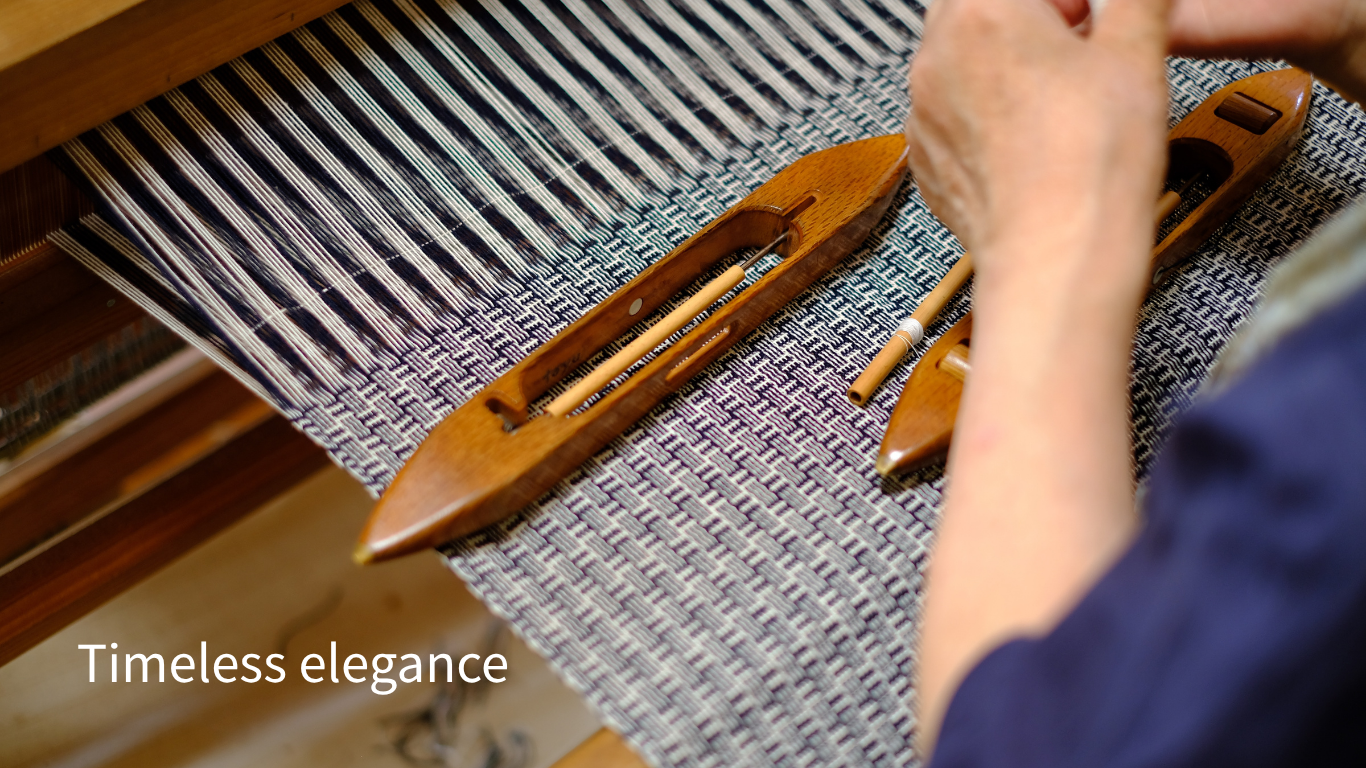
Tsumugi (紬) is a unique class of Japanese silk textile woven using hand-spun thread derived from “Mawata” (hand-pulled silk floss). Historically, when silk cocoons were harvested, high-grade cocoons were reserved for formal glossy silk, while damaged, double-spun, or wild cocoons were kept by local farm families. Not wanting to waste any silk, farm women hand-pulled these secondary cocoons into soft floss sheets (mawata), spun them into highly textured, uneven threads, and hand-wove them into exceptionally durable clothing.
Because the threads are hand-spun, Tsumugi features characteristic horizontal slubs and a warm, matte texture. Unlike formal kimonos, Tsumugi is not shiny. Instead, it is celebrated for “iki” (stylish understatement)—a deeply rooted Japanese aesthetic where true quality and luxury are hidden in the weave itself, recognizable only to those who appreciate the craft. Remarkably, Tsumugi is so durable that a single kimono is often passed down and worn through three generations, becoming softer and conforming more perfectly to the body with each decade of use.
Japan’s Three Most Famous Tsumugi Heritage Textiles
Across Japan, various regions developed their own unique Tsumugi styles based on local water, dye materials, and weaving techniques. Today, three regional varieties are globally celebrated as the premier Tsumugi textiles of Japan:
1. Oshima Tsumugi (Kagoshima Prefecture)
Hailing from Amami Oshima island in southern Kagoshima, Oshima Tsumugi is world-famous for its complex mud-dyeing process (“Dorozome”) and microscopic ikat (“Kasuri”) patterns. The silk threads are dyed dozens of times in local mud rich in iron and wood broth from the native Teichi tree, resulting in a deep, lustrous black-brown color. The precision required to align the hand-dyed threads into intricate geometric or floral patterns is so intense that weaving a single bolt of fabric can take up to a year.
2. Yuki Tsumugi (Ibaraki & Tochigi Prefectures)
Designated as both an Important Intangible Cultural Property of Japan and a UNESCO Intangible Cultural Heritage, Yuki Tsumugi represents the pinnacle of traditional silk processing. It is the only textile in Japan where 100% of the thread is hand-spun from mawata without any twist. The weaving is performed on a primitive backstrap loom (“jibata”). Because the threads are twistless, Yuki Tsumugi is incredibly light, warm, and feels almost like a second skin, resembling soft cotton more than conventional silk.
3. Ueda Tsumugi (Nagano Prefecture)
Right here in Nagano, the historic castle town of Ueda has produced one of Japan’s most beloved textiles for over 400 years. Famed for its elegant, clean stripes (“shima”) and checking patterns (“koshi”), Ueda Tsumugi was highly favored during the Edo period. It is affectionately known as “Sanada Tsumugi” because the famous samurai Sanada clan popularized the weave. Ueda Tsumugi is incredibly sturdy; historically, merchants and kabuki actors loved it because it could withstand daily, active wear. It represents Nagano’s rich history of silkworm cultivation and weaving craftsmanship.
Experiencing Ueda Tsumugi in Nagano Today
For travelers visiting Nagano, Ueda is a spectacular stop. You can visit historic weaving workshops that have been operating since the Edo period, watch master weavers work handlooms, and even participate in hands-on coaster weaving workshops. Renting a Ueda Tsumugi kimono to stroll through the historic streets of Ueda Castle or nearby temple towns offers an authentic connection to Japanese heritage that goes far beyond typical sightseeing.
Tsumugi kimono is a living testament to the Japanese spirit of “Mottainai” (avoiding waste) and the transformation of raw, rustic materials into fine art. On your next trip to Nagano, be sure to touch this incredible fabric and feel centuries of local history woven into every thread!