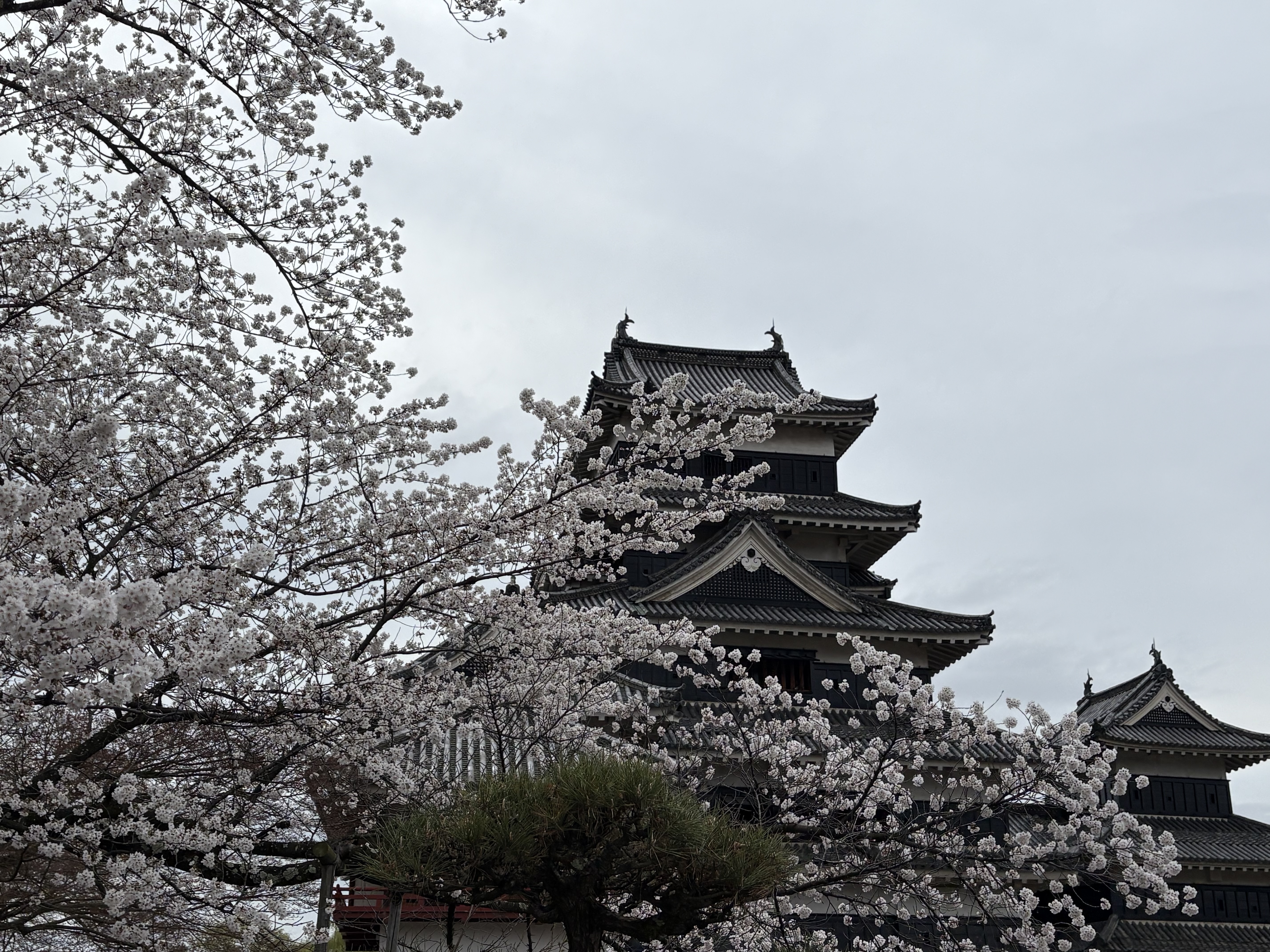
Matsumoto Castle (松本城), located in the scenic valley of Nagano Prefecture, is one of Japan’s premier historic landmarks. Designated as a National Treasure, it is one of the few remaining original castles in the country, surviving centuries of wars, earthquakes, and modernization. Famous for its striking black-and-white plaster facade, it is affectionately nicknamed the “Crow Castle” (Karasu-jo). While many other castles in Japan are concrete reconstructions, Matsumoto Castle retains its original wooden keep and interior structure, offering travelers a truly authentic journey into the samurai era.
Strategic Design: Built for Feudal Warfare
Built in the late 16th century (around 1592-1614), Matsumoto Castle is a flatland castle (hirajiro) surrounded by an elegant triple moat system. Although the exterior looks beautiful and serene, the architecture is a highly engineered fortress designed for intense combat. As you climb through the wooden keep, you will notice strategic defensive features: small narrow window slits for arrows (“yazama”), wider square ports for matchlock muskets (“teppoyama”), and the “ishi-otoshi” (stone-drop chutes) positioned at the corners to drop rocks or boiling water onto scaling attackers.
One of the most fascinating architectural secrets of the castle is its “hidden floor.” From the outside, the main keep appears to have only five stories. However, the interior actually has six floors. The third floor is completely windowless, receiving no light from the outside. Historically, this dark, secure space served as a tactical warehouse for ammunition and a safe shelter for samurai defenders during sieges.
The Tsukimi Yagura: Elegant Moon-Viewing in Times of Peace
Unlike European castles designed purely for defense, Japanese castles often evolved to reflect peacetime culture. In 1635, as Japan entered a long period of peace under the Tokugawa shogunate, the local lord added a unique Moon-Viewing Pavilion (“Tsukimi Yagura”) adjacent to the main keep. With its three open sides and bright vermilion lacquer railings, this elegant room stands in beautiful, peaceful contrast to the dark, fortified main castle. Here, feudal lords (daimyo) and their guests would gather to compose poetry, drink sake, and admire the autumn moon reflecting in the surrounding moat.
Top Photo Spots & Photography Angles
Matsumoto Castle is incredibly photogenic, changing its aesthetic charm across the four seasons. Here are the three best locations to capture the perfect shot:
• The Red Uzume Bridge: Position yourself on the southwest side of the outer moat. The bright red wooden Uzumebashi bridge creates a spectacular pop of color when framed against the dark black castle and its reflection in the water.
• The Northern Alps Backdrop: On clear winter and spring days, head to the park’s eastern lawn. You can photograph the black castle roofs directly in front of the massive, snow-capped peaks of the Japanese Northern Alps.
• Golden Hour & Night Illumination: Every night from dusk until 10:00 PM, the castle keep is illuminated. The soft lights reflect off the calm moat waters, producing a dramatic, mirror-like black silhouette that is a must-see for photographers.
Visitor Guide & Planning Your Visit
Matsumoto Castle is an easy 15-minute flat walk from Matsumoto Station, or a short ride on the Town Sneaker bus. The castle park is free to walk around, but paid admission is required to enter the wooden keep. To preserve the ancient structure, visitors must remove their shoes at the entrance and carry them in a plastic bag. Be prepared to navigate the extremely steep, historic wooden stairs inside the castle—the steepest flight climbs at a dramatic 61-degree angle! Climbing to the top floor awards you with a panoramic view of the entire city and the surrounding mountains.
Add Matsumoto Castle to your Nagano cycling or sightseeing itinerary to experience centuries of authentic samurai history firsthand!